
Wearing Many Hats: A Selection of Women’s Hats
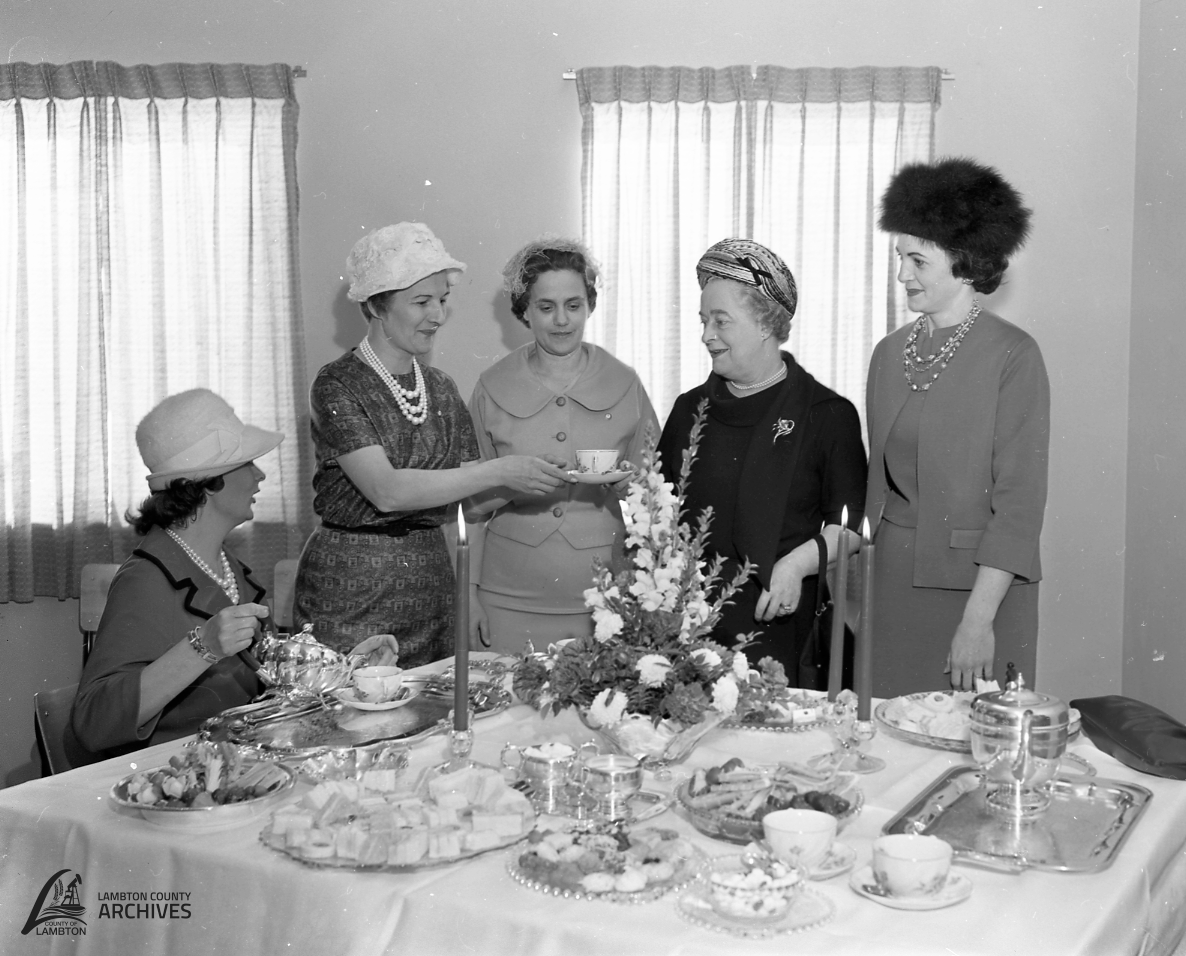
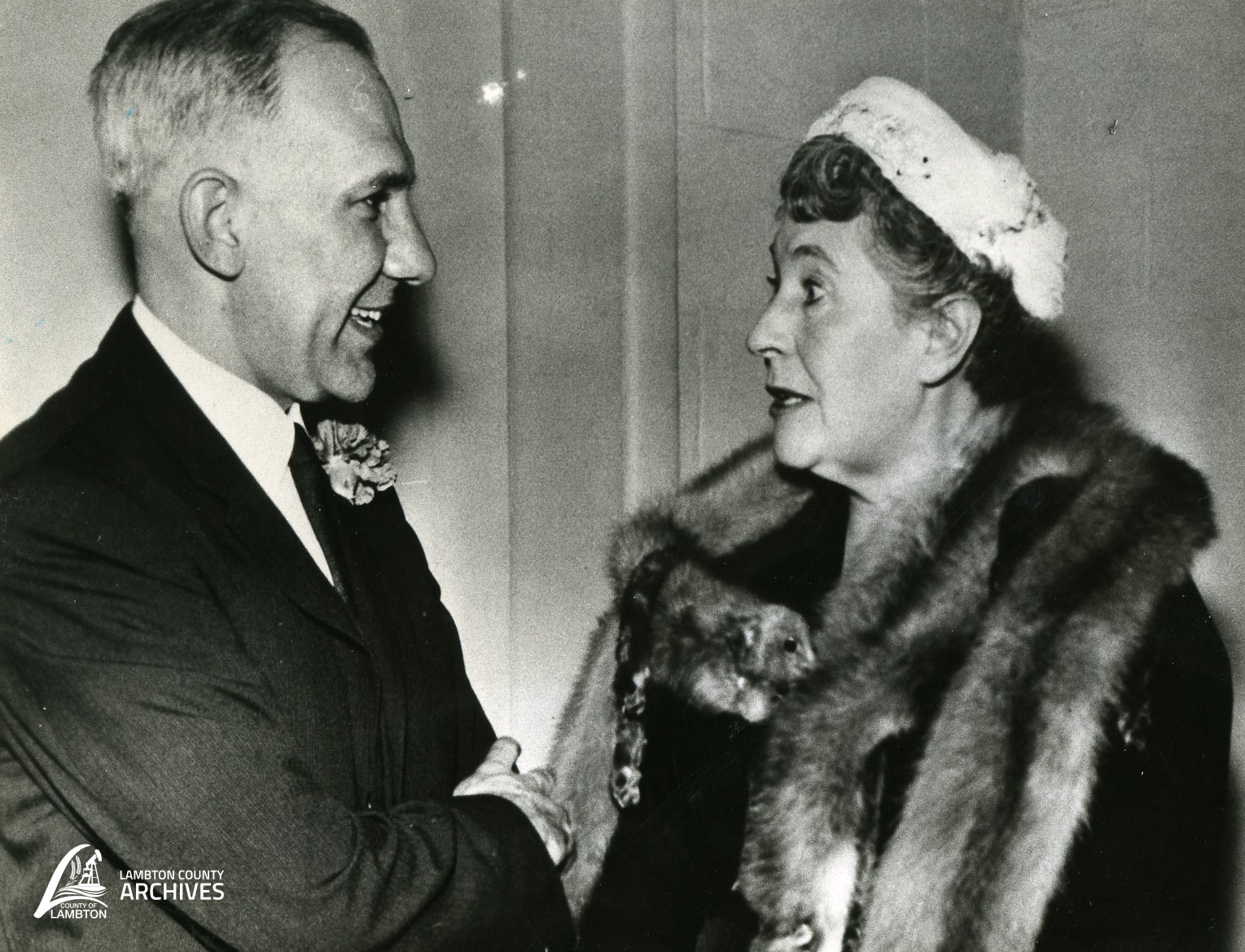
Today, people wear hats to special events, to accessorize an outfit, make a statement, or serve a purpose. Not long ago, women rarely went out in public without a hat. In the late 1800s and early 1900s, women’s hats were richly decorated and often extravagantly large. As the 1900s progressed, women adopted more active lifestyles. Two world wars imposed a sense of practicality and thrift. Moderately proportioned, easy to wear hats were standard until the 1960s. Explore a selection of women’s hats from the Lambton Heritage Museum collection below.
Early Hat Styles
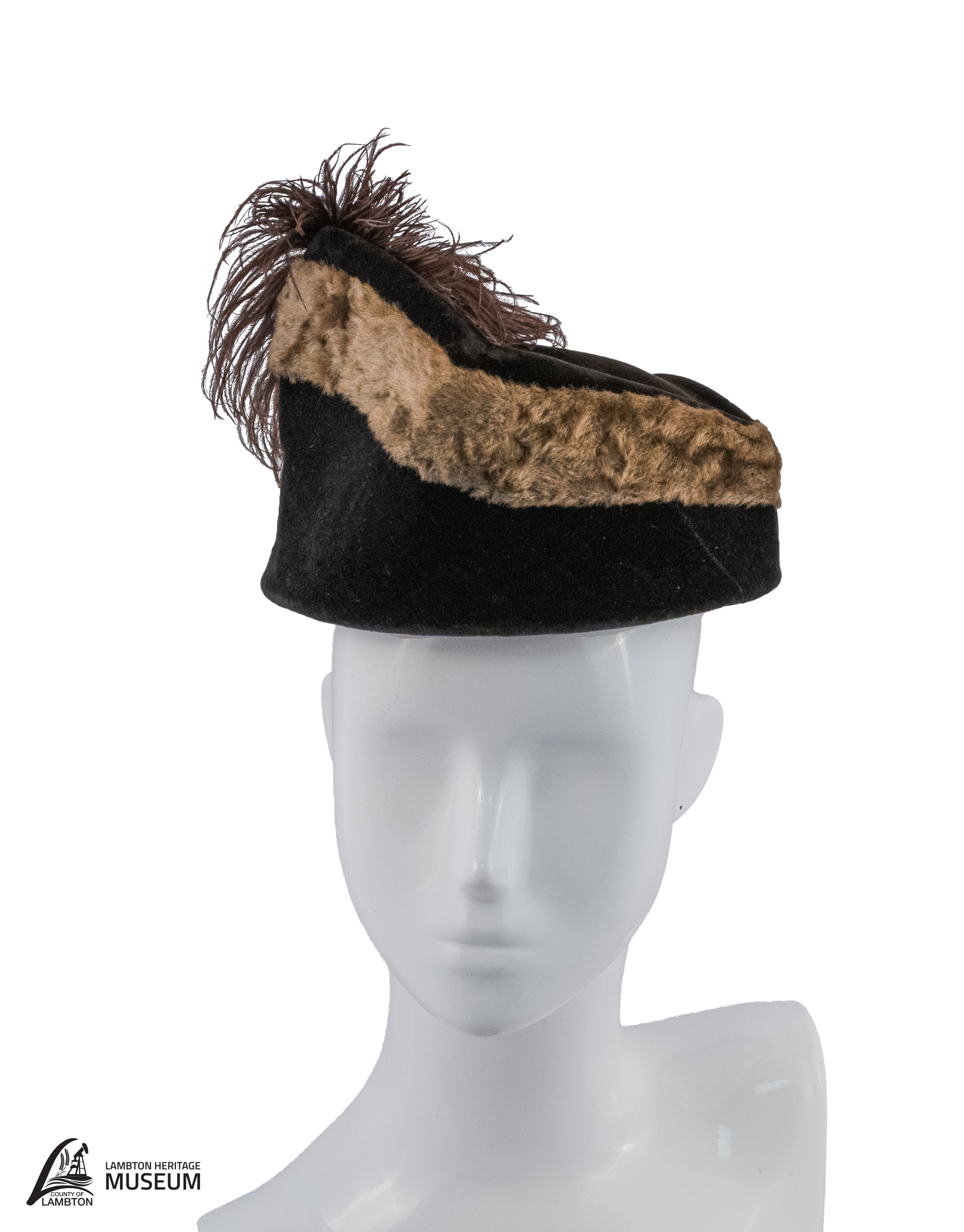
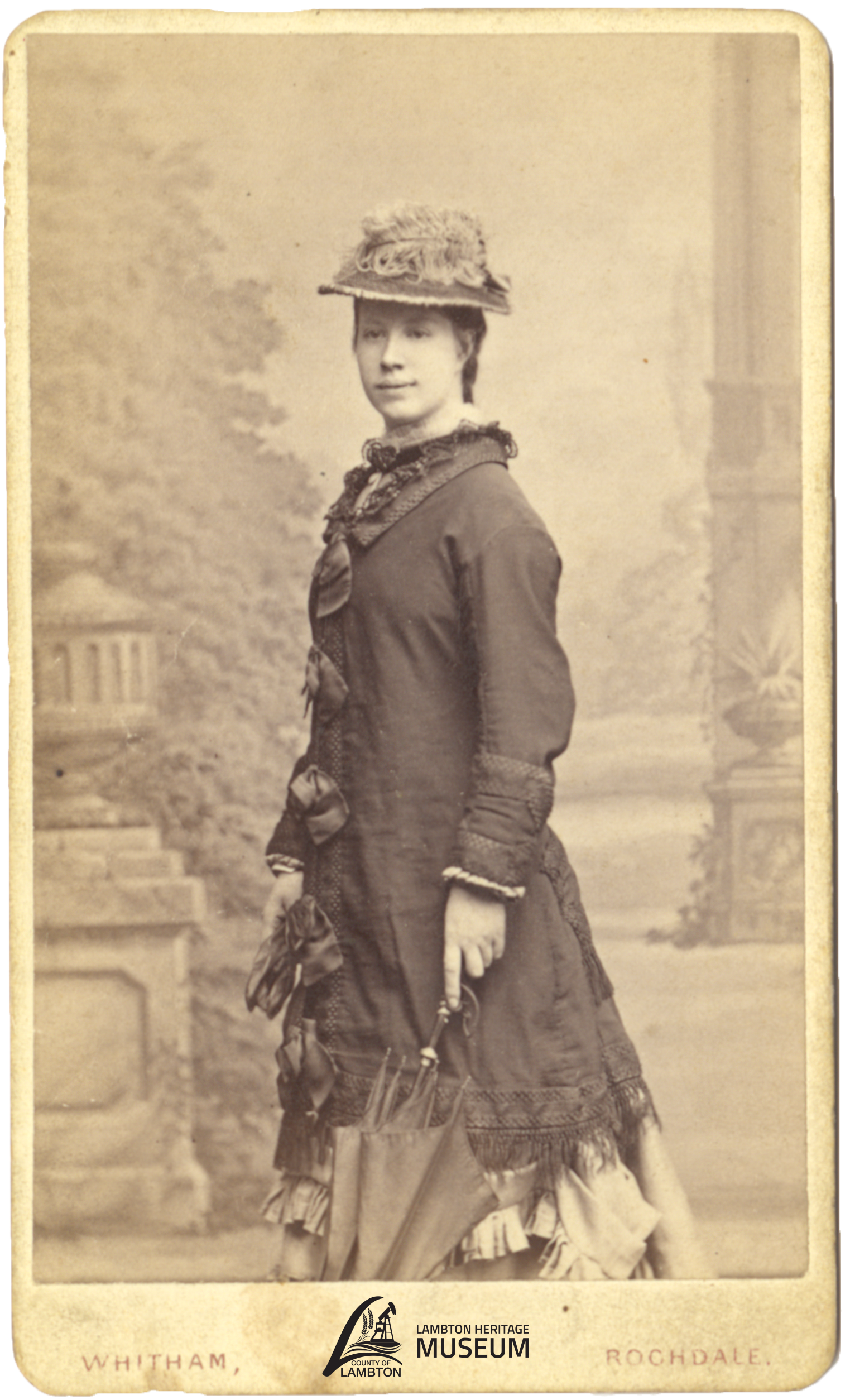
Bonnets were common in Europe in the late 1700s and early 1800s. Their popularity spread to North America. Traditional bonnets have hard or soft side brims that frame the face and ribbons that tie under the chin. They were made of straw, board, or fabric. Decorations included artificial flowers, ribbons, lace, and feathers. Over time, bonnets became associated with modesty, a matronly appearance, and young children. The style fell out of favour by the late 1800s. Fashionable women turned to flat-brimmed and brimless hats that sat on top of the head. Confusingly, these were sometimes still called bonnets, especially if they were secured with ribbons.
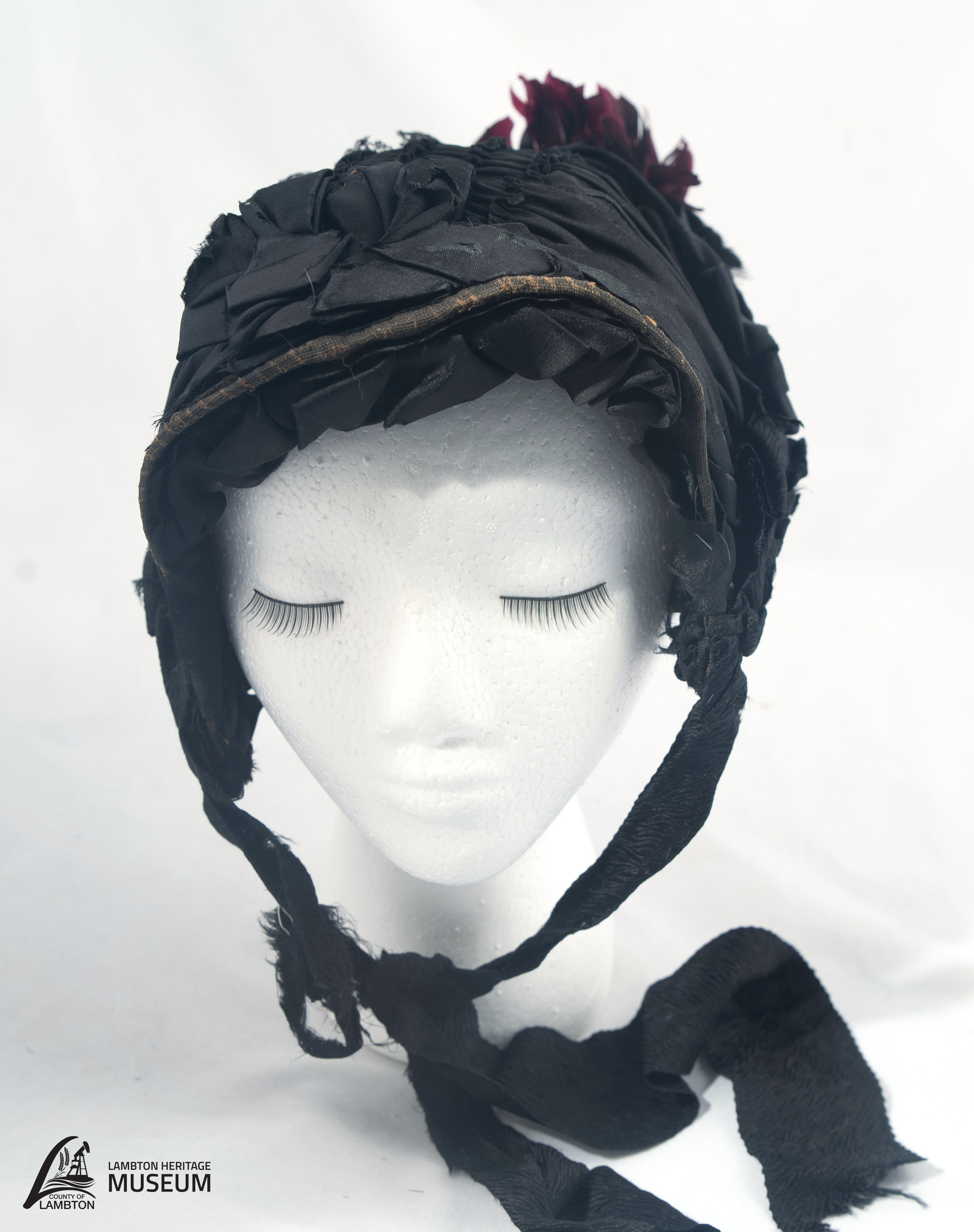
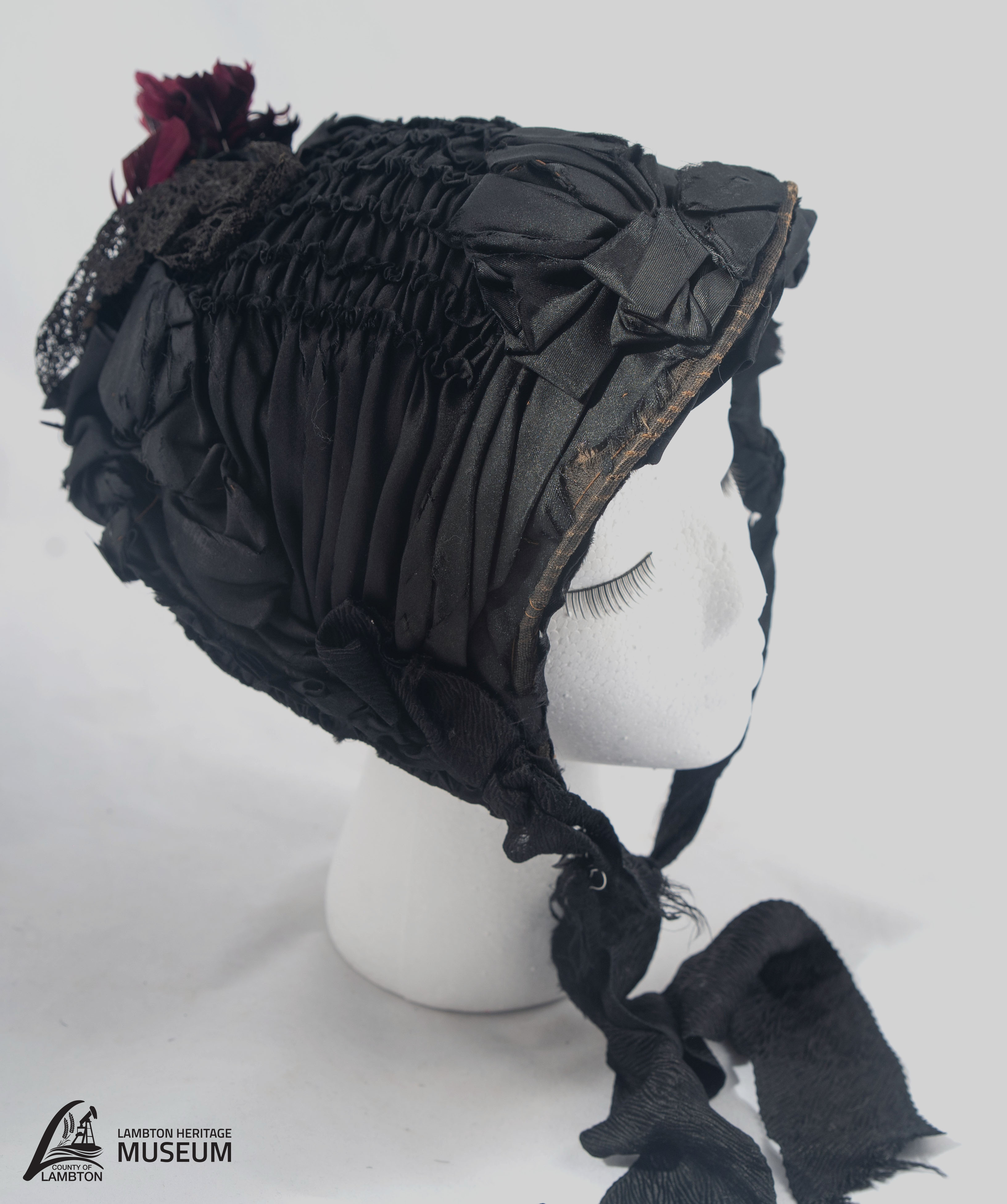
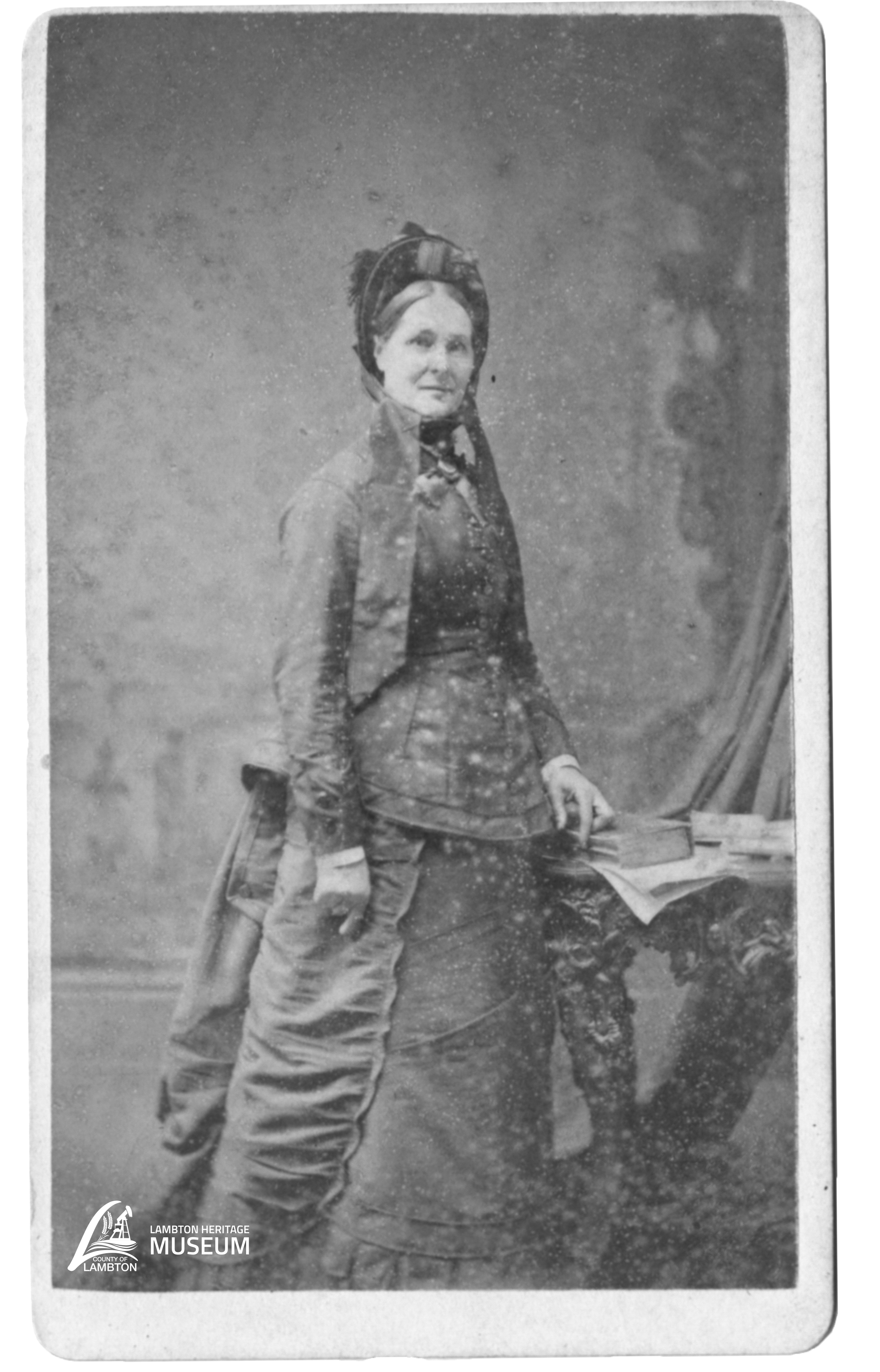
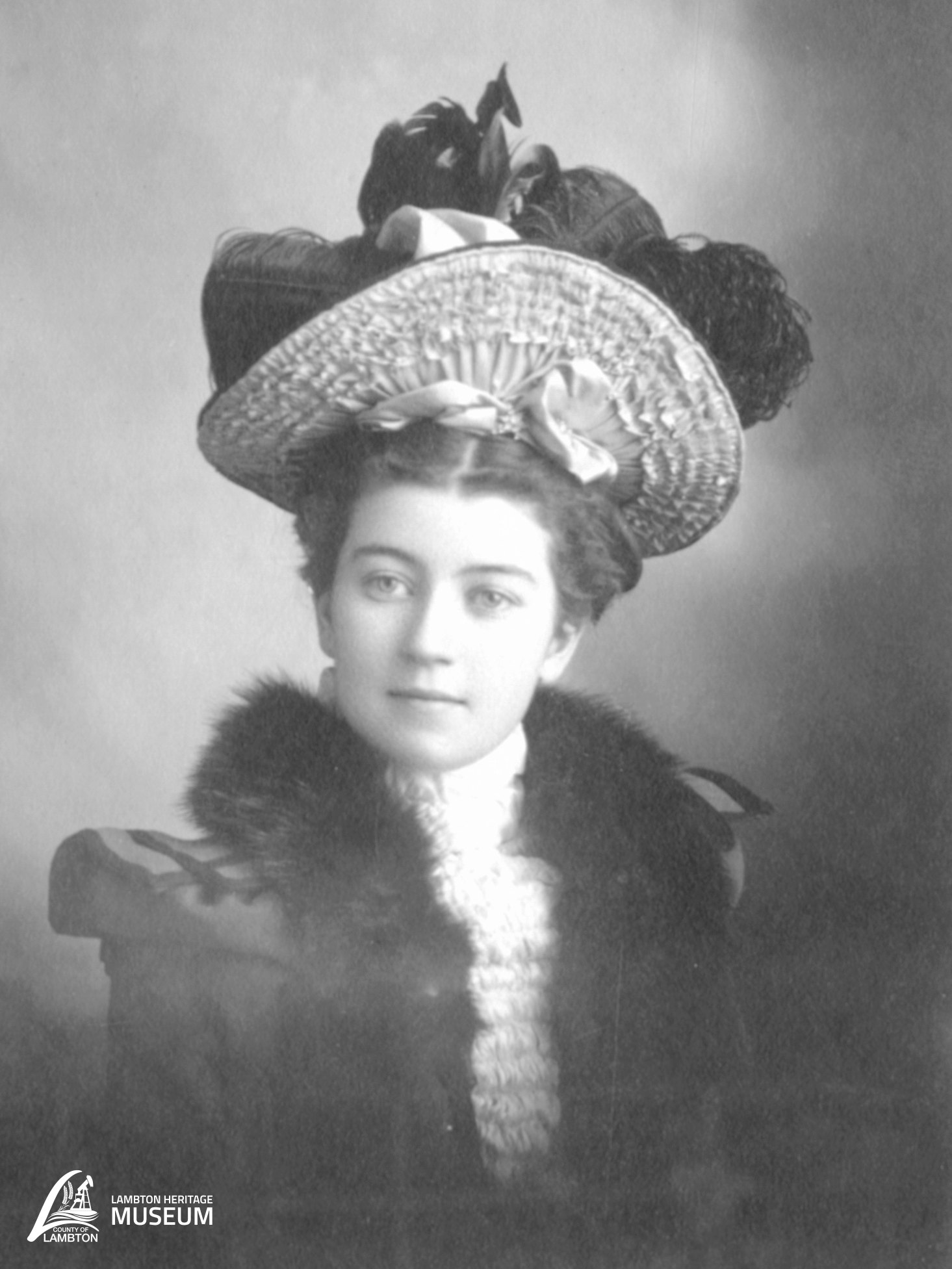
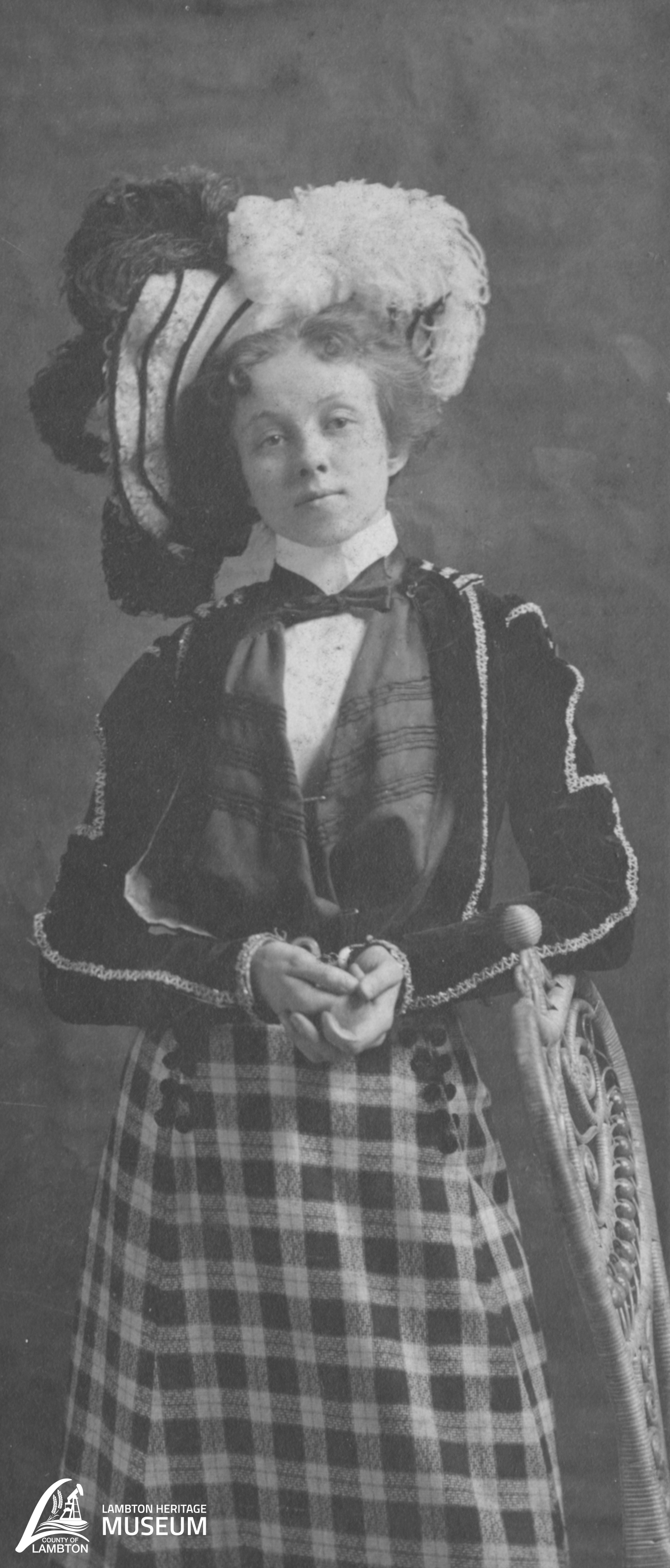
Bellmira Hewson was born in Yorkshire, England in 1840 and immigrated to Canada with her parents before 1851. She married Valentine Mitchell in the 1860s and raised five children in Huron County. Three of her hats were donated to the Museum. They reveal her unique sense of style and date to about 1910.
Cloche Hats
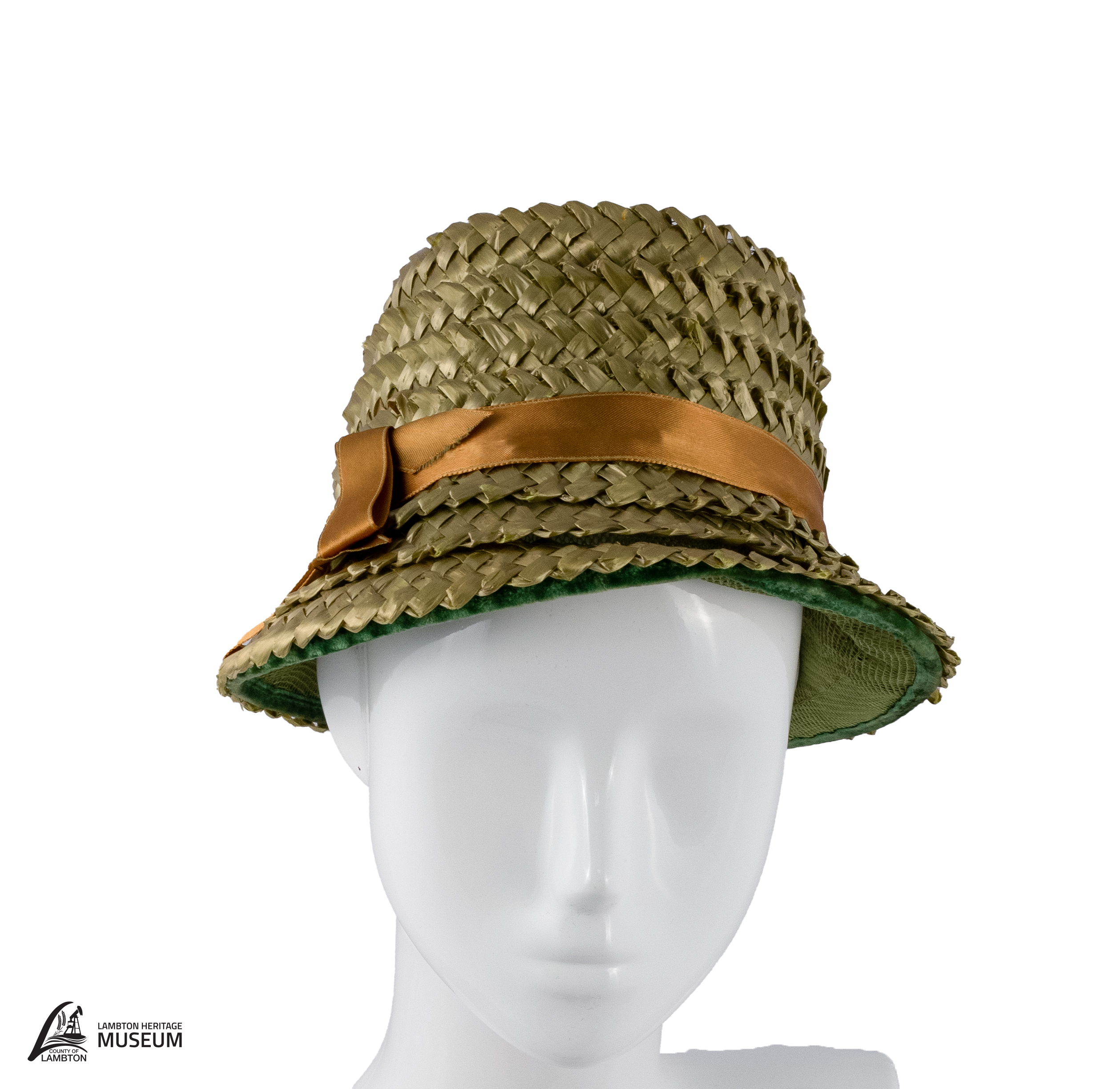
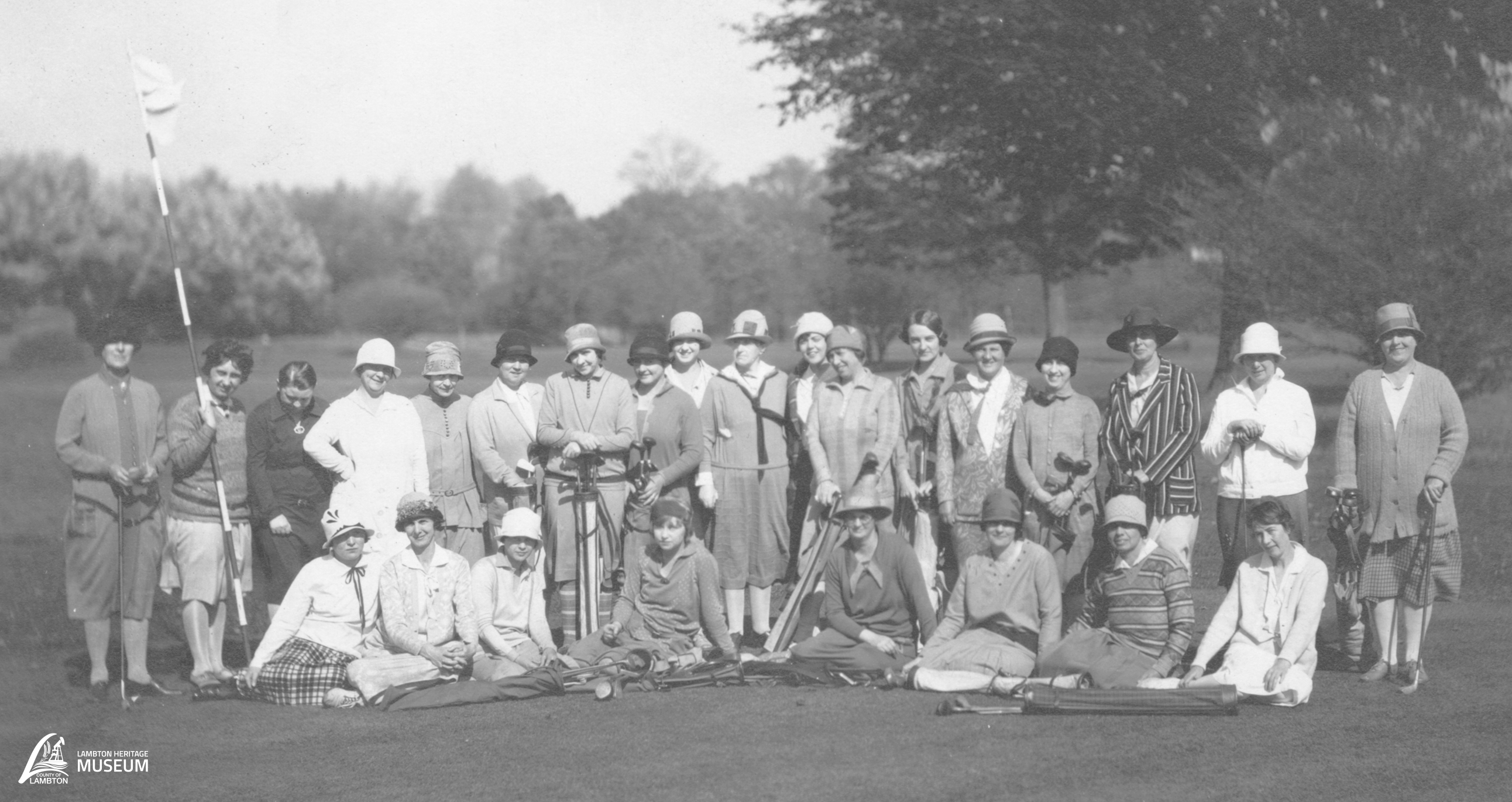
Cloche is the French word for bell. A cloche hat is close-fitting with a deep, bell-shaped crown. This style dominated the 1920s. These hats fit perfectly over the bobbed or cropped hairstyles popular with young women. Cloche hats were worn low over the ears and forehead, nearly covering the eyes, and jauntily turned to one side. They were available in materials ranging from felt to straw and decorated to suit any occasion. Like many ladies’ hat styles, cloche hats have come in and out of fashion several times since their heyday.
Turban Hats
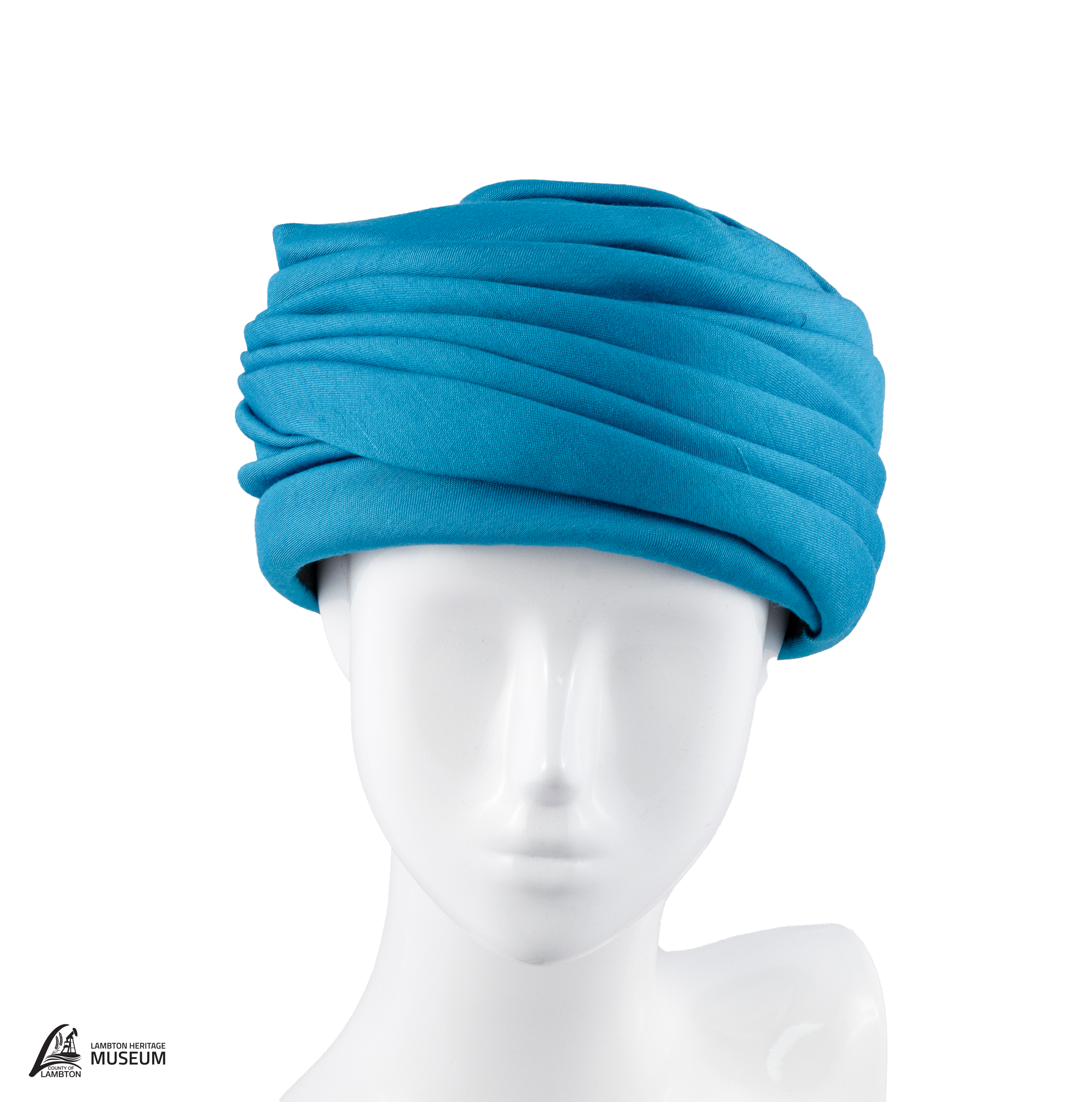
Turban style headpieces date back thousands of years. A basic turban is simply fabric wrapped around the head. This practical style requires little material and modest sewing skills. Glamorized from the 1930s by celebrities like Greta Garbo and Grace Kelly, the style was practical during wartime when women were doing more physical work. A casual turban is also a great way to cover up a bad hair day! A turban hat is even easier to wear. Wrapped cloth is mounted to a hat form, removing the need to drape the fabric for each wear.
Pillbox Hats
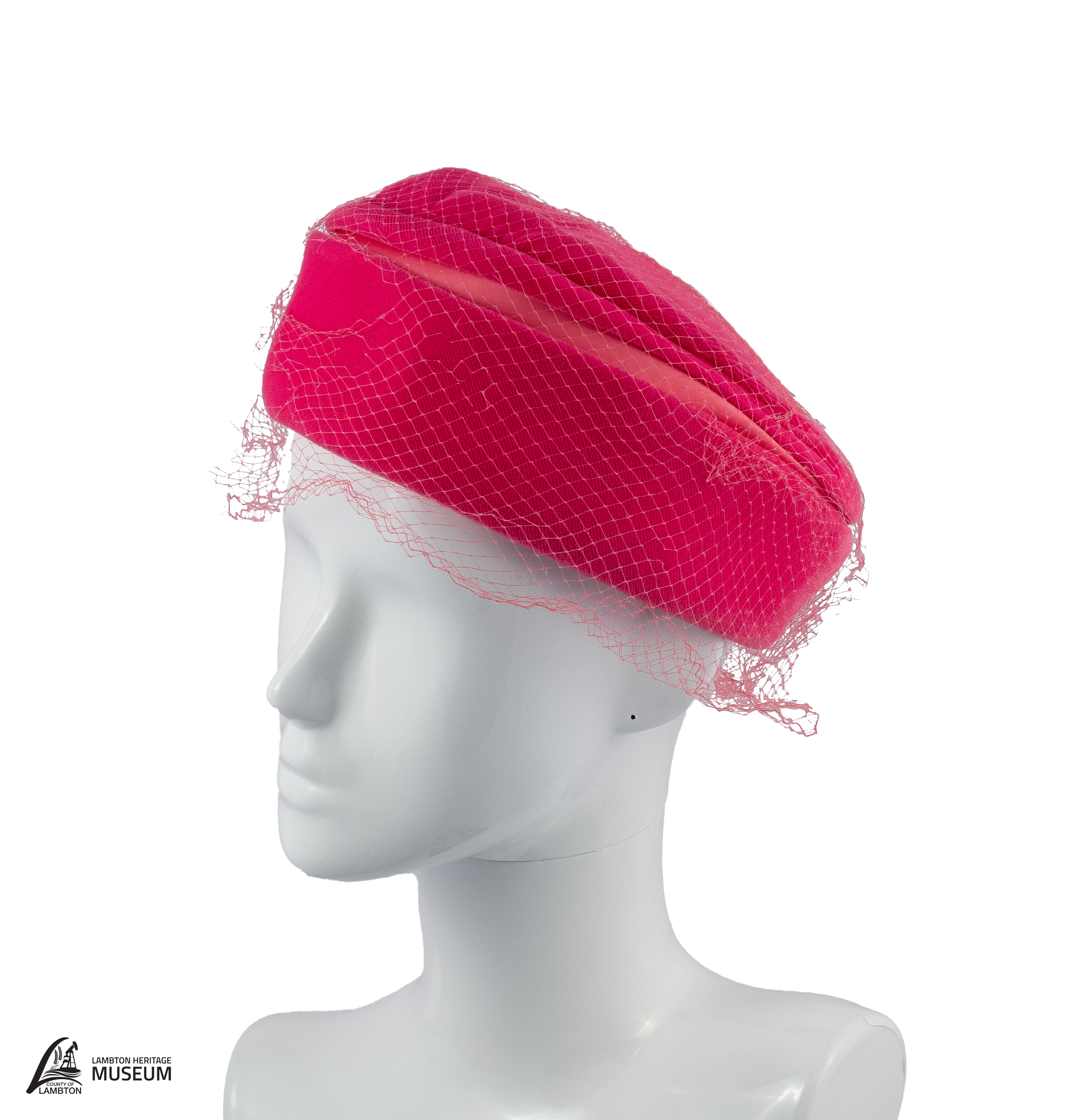
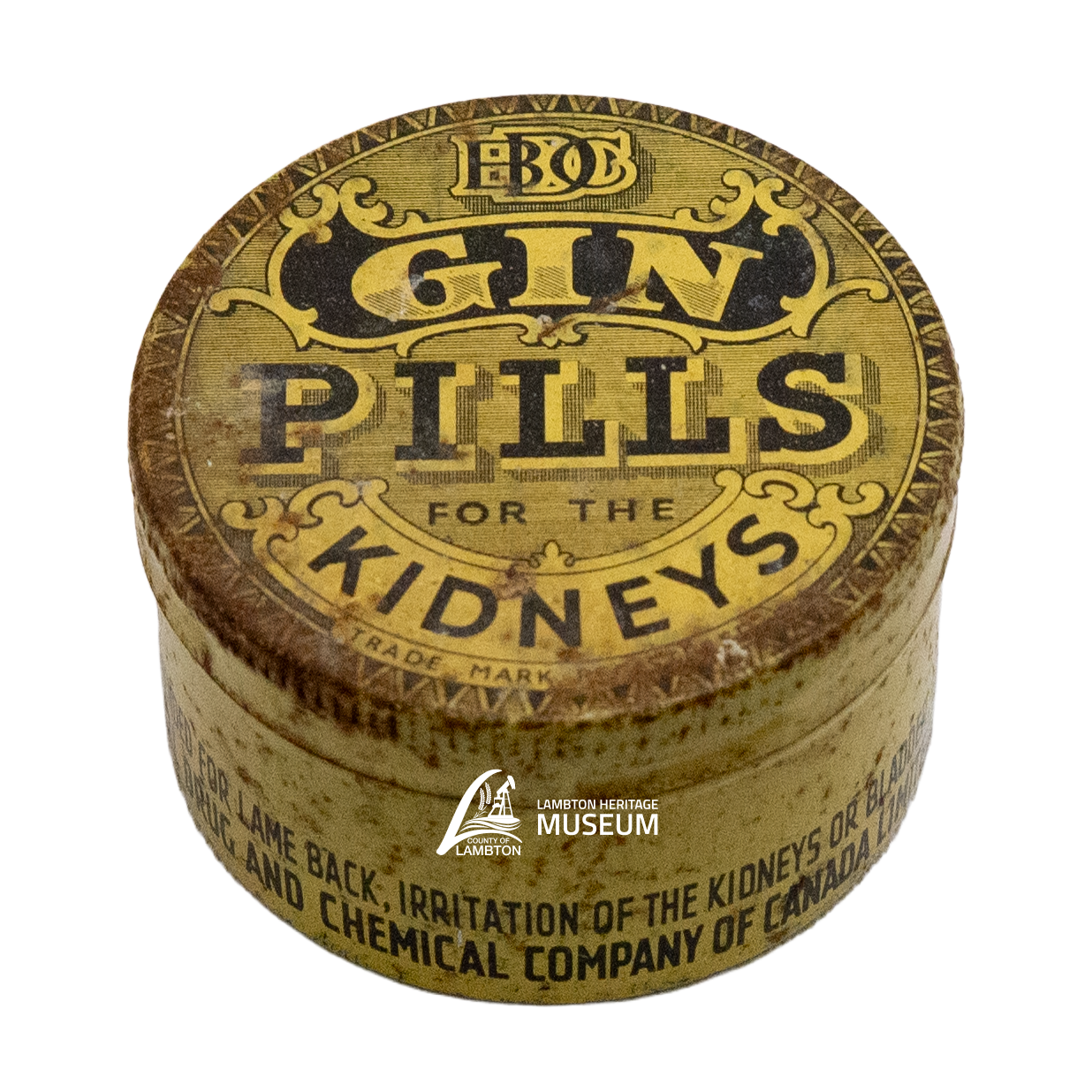
A pillbox hat is round or oval with a flat crown, straight sides, and no brim. Small to medium in size, it is designed to sit neatly on top of the head or slightly towards the back. The shape is named after cylindrical pill containers once used by pharmacists. It was also a type of military headgear. Fashion designers embraced the style for its minimalist structure and clean lines. In 1961, Jacqueline Kennedy wore one to her husband John F. Kennedy’s presidential inauguration. Instantly, the pillbox hat became a mid-century classic.
Berets
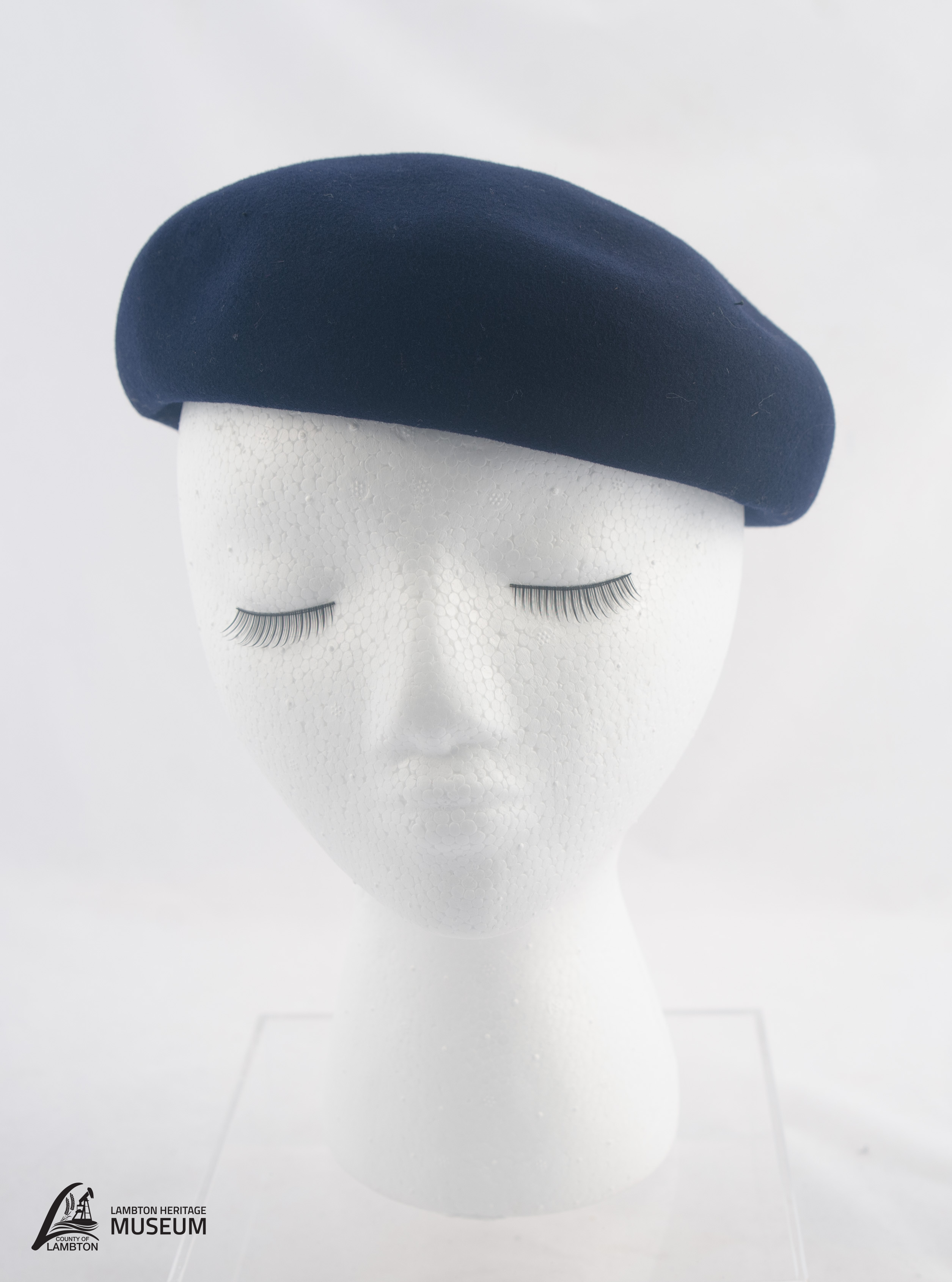
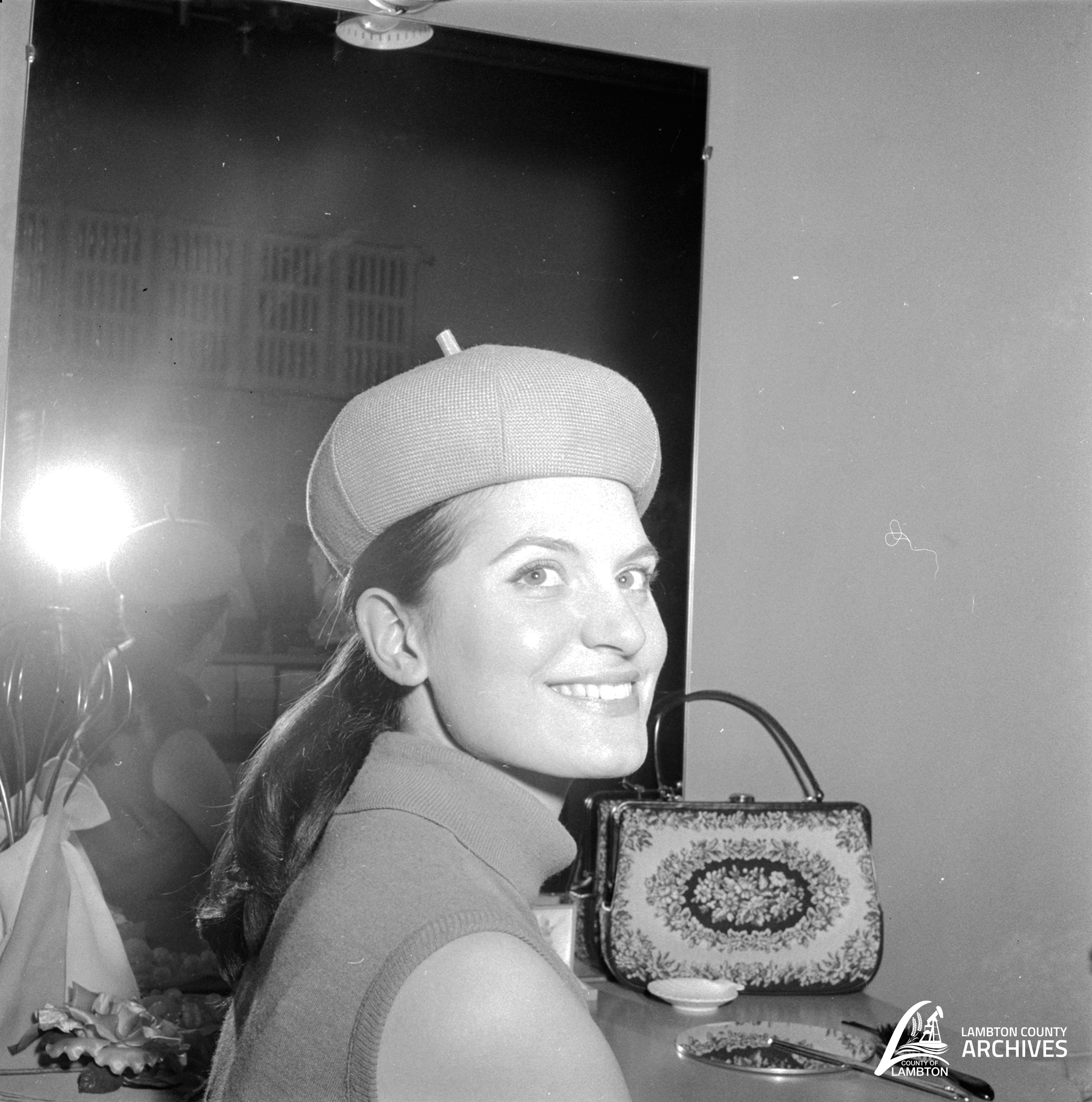
A beret is a flat, round, soft cap. Its roots are in the Basque region of Spain and the French Pyrenees where it was worn as a peasant cap. The beret has been adopted by elite military units worldwide. It is an important symbol of French culture with ties to Impressionist painters, members of the French Resistance during the Second World War, and female style icons like Brigitte Bardot. Traditional berets are made of wool or felt, have a defined structure and sit precisely on the head. Often, a small stem sticks up in the centre as a holdover from the knitting process. Variations can be made of yarn, leather, suede, straw, or cotton. Tams are similar hats with a wider, more defined brim.
The Hazel Hat Collections
A milliner designs, makes, trims, or sells women’s hats. Millinery refers to the work of a milliner or simply means women’s hats. The following examples of millinery from the mid-1900s are a few highlights among the many styles that evolved. Shapes, sizes, materials, and colours ebbed and flowed in popularity until hat-wearing declined after the 1960s.
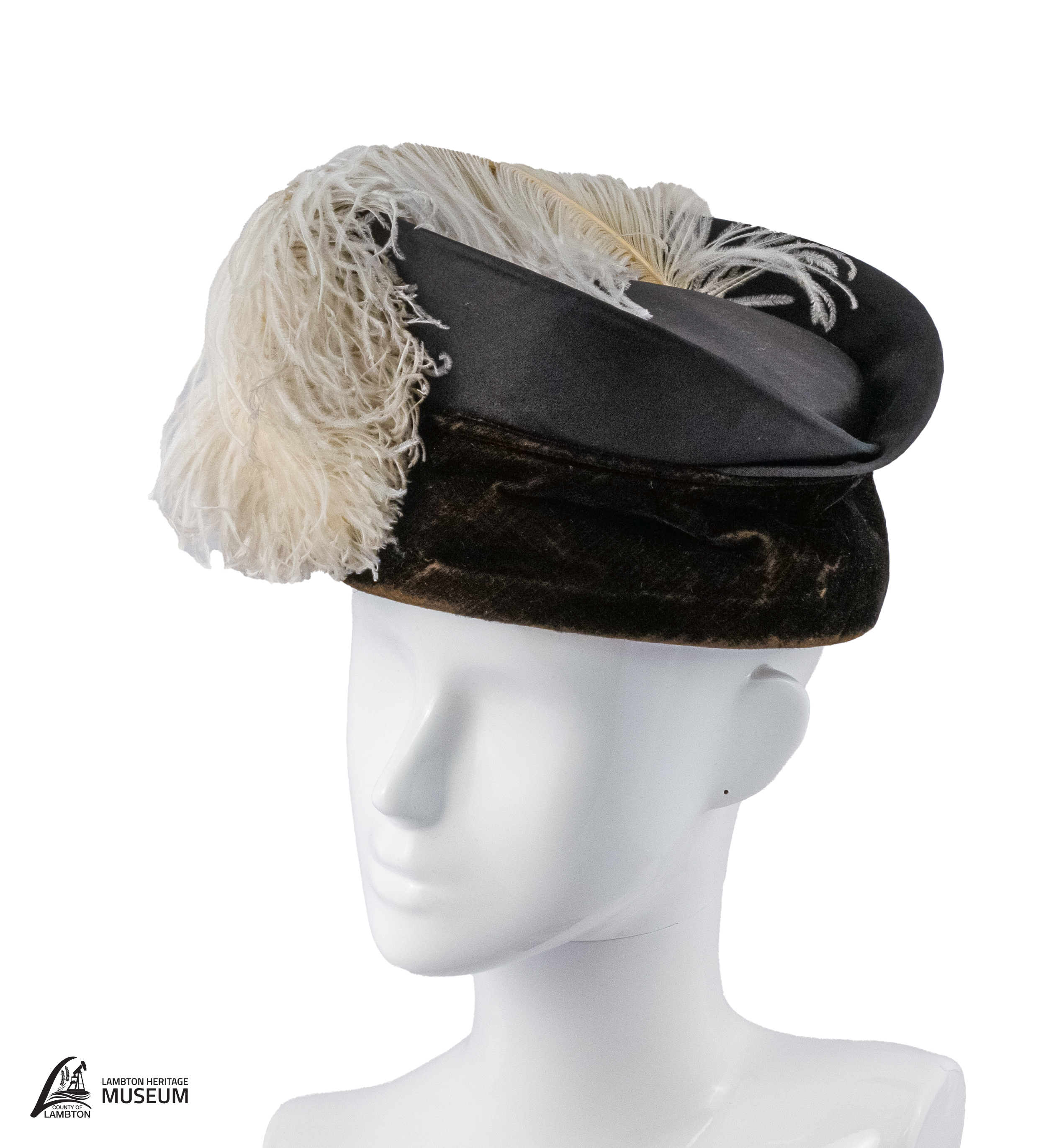
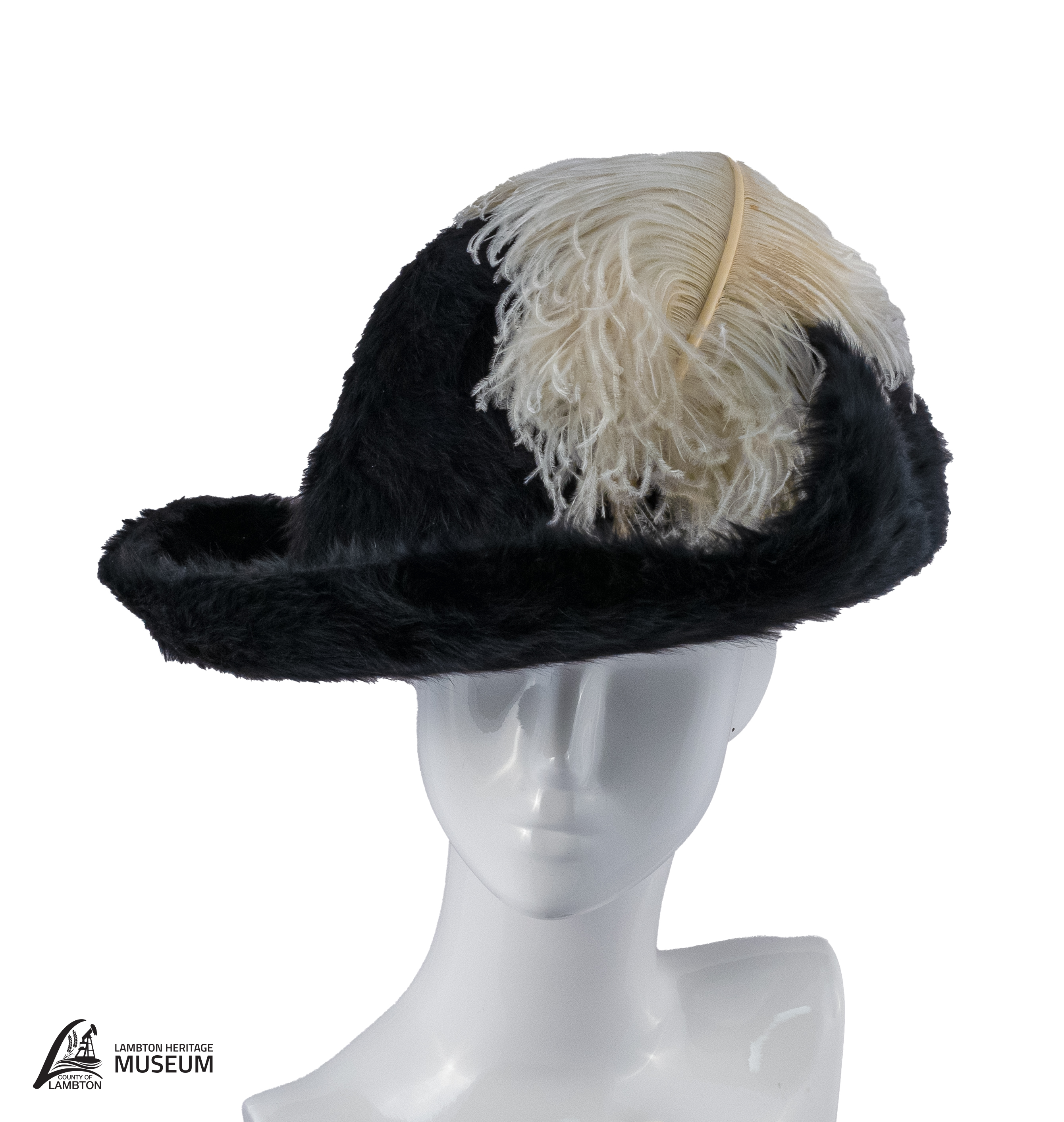
Two ladies named Hazel had significant hat collections. Hazel Alice Anna Matthews (1898-2001) was born in Lambton County. In 1928, she married Malcolm MacFarlane, a farmer and thresher in Plympton Township. MacFarlane died in 1959 and Hazel married Jack Lamont. Hazel Lillian Mae Davidson (1910-1995) lived in the same period. She was born in Sombra Township and married Calvin Ashely Moore in 1929. They lived in Plympton Township for several years before moving out of the area. Interesting examples from their collections are included here.
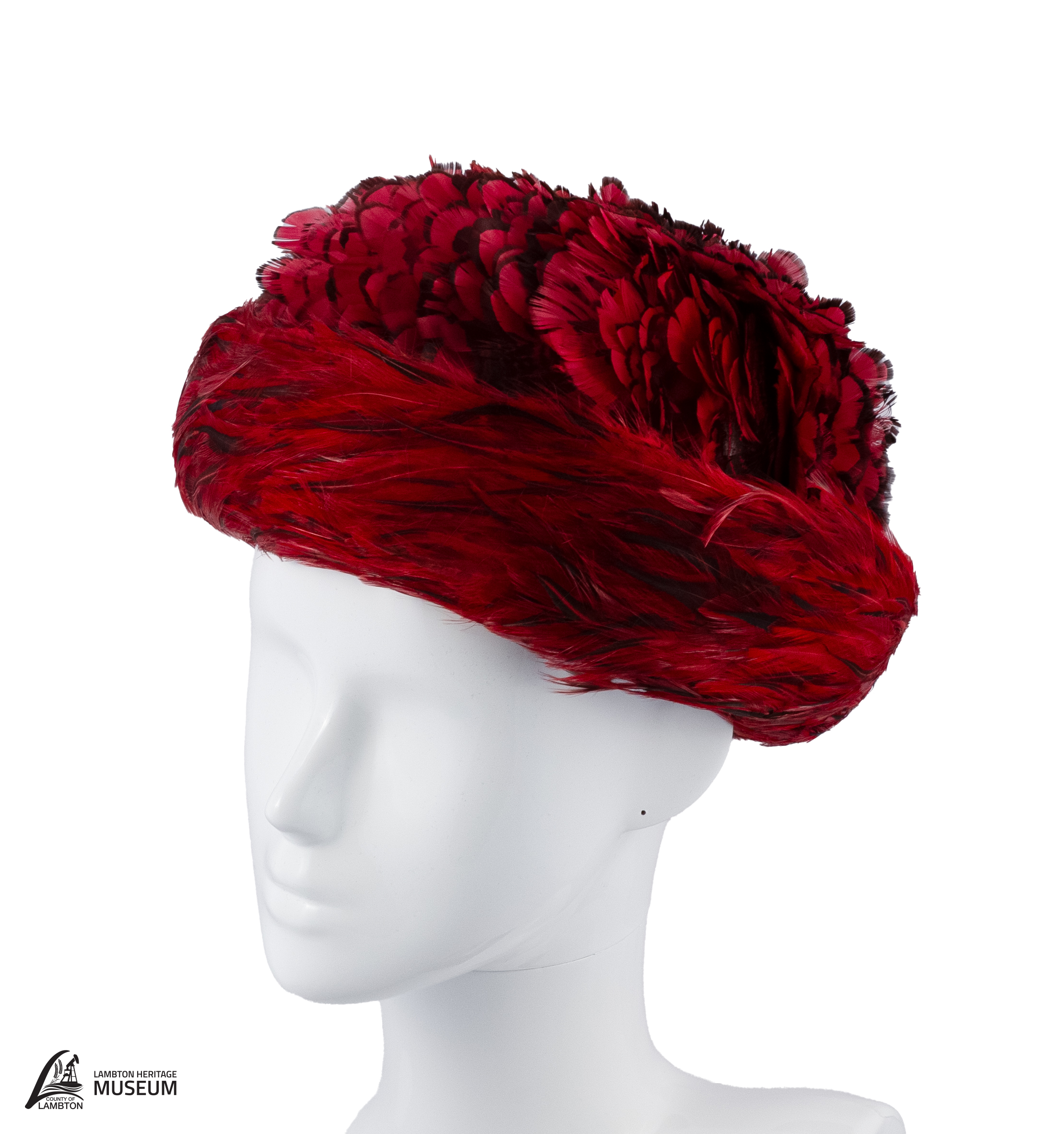
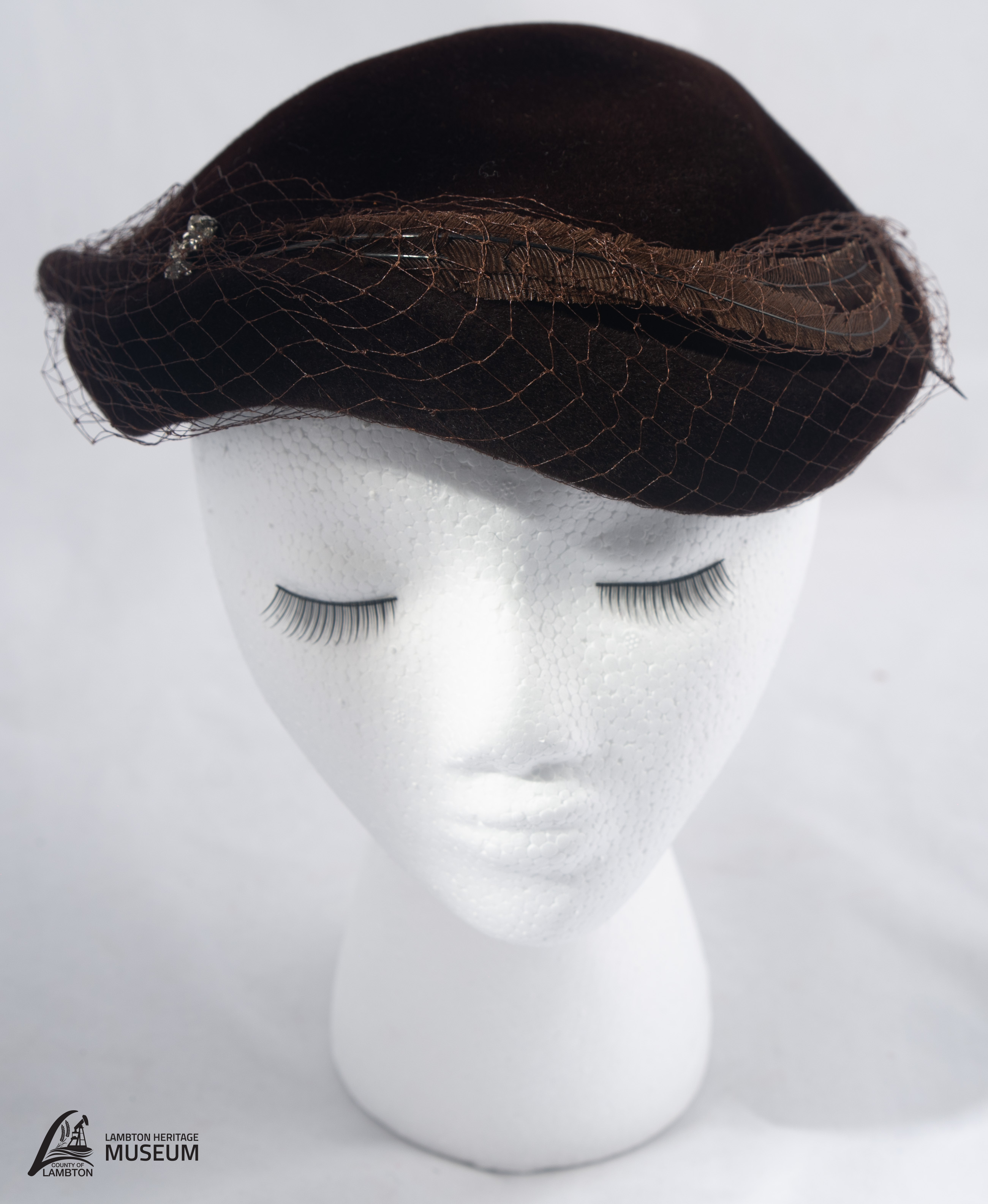
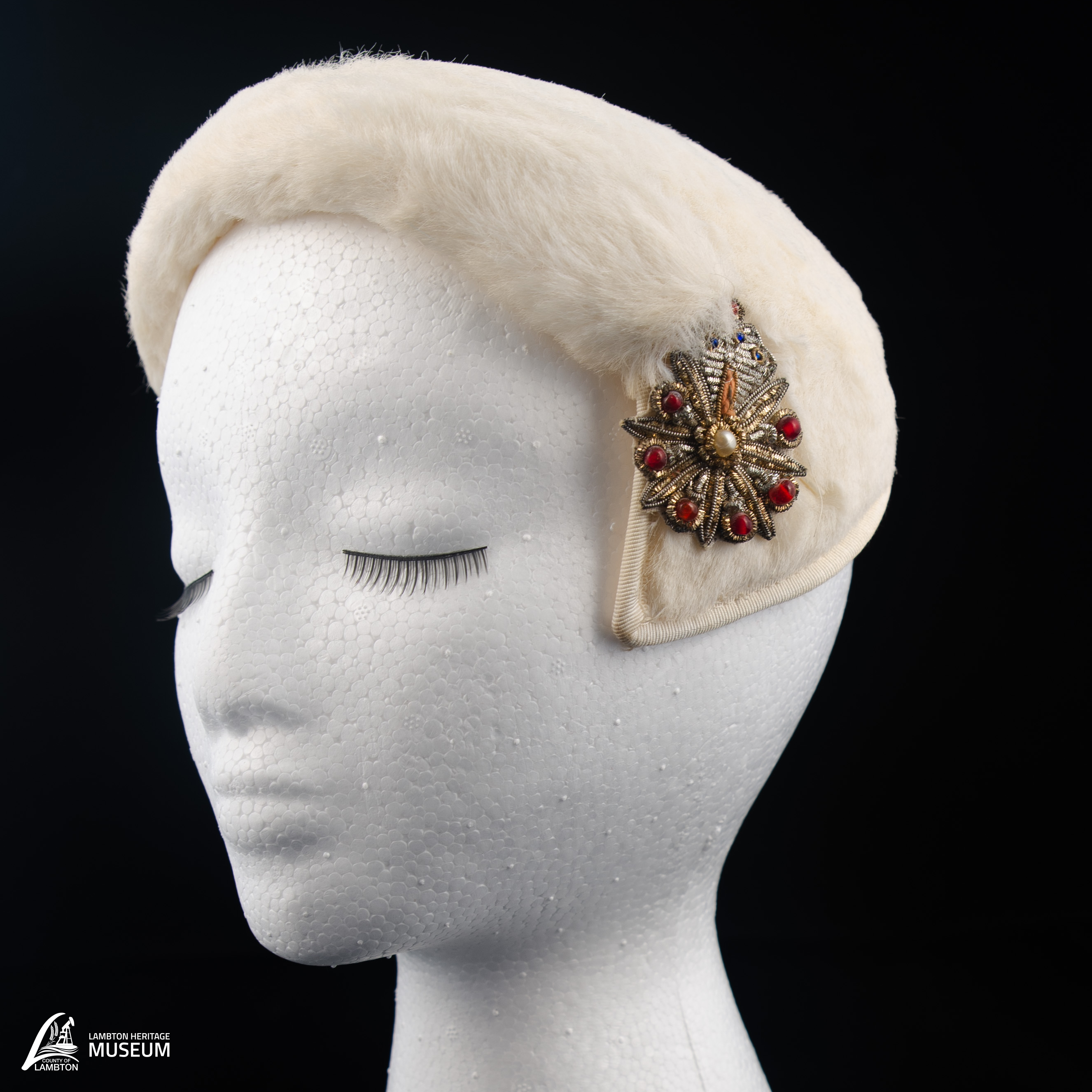
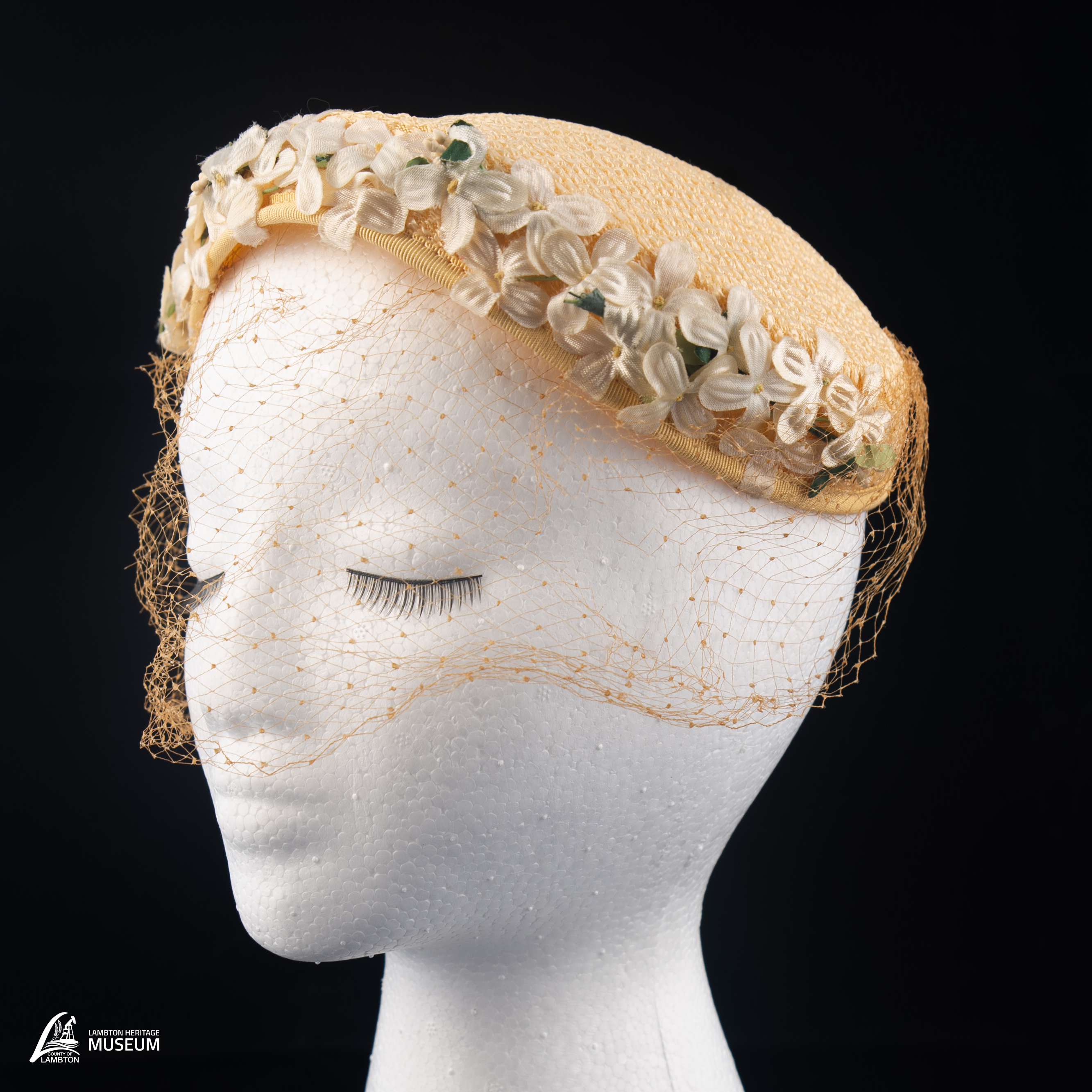
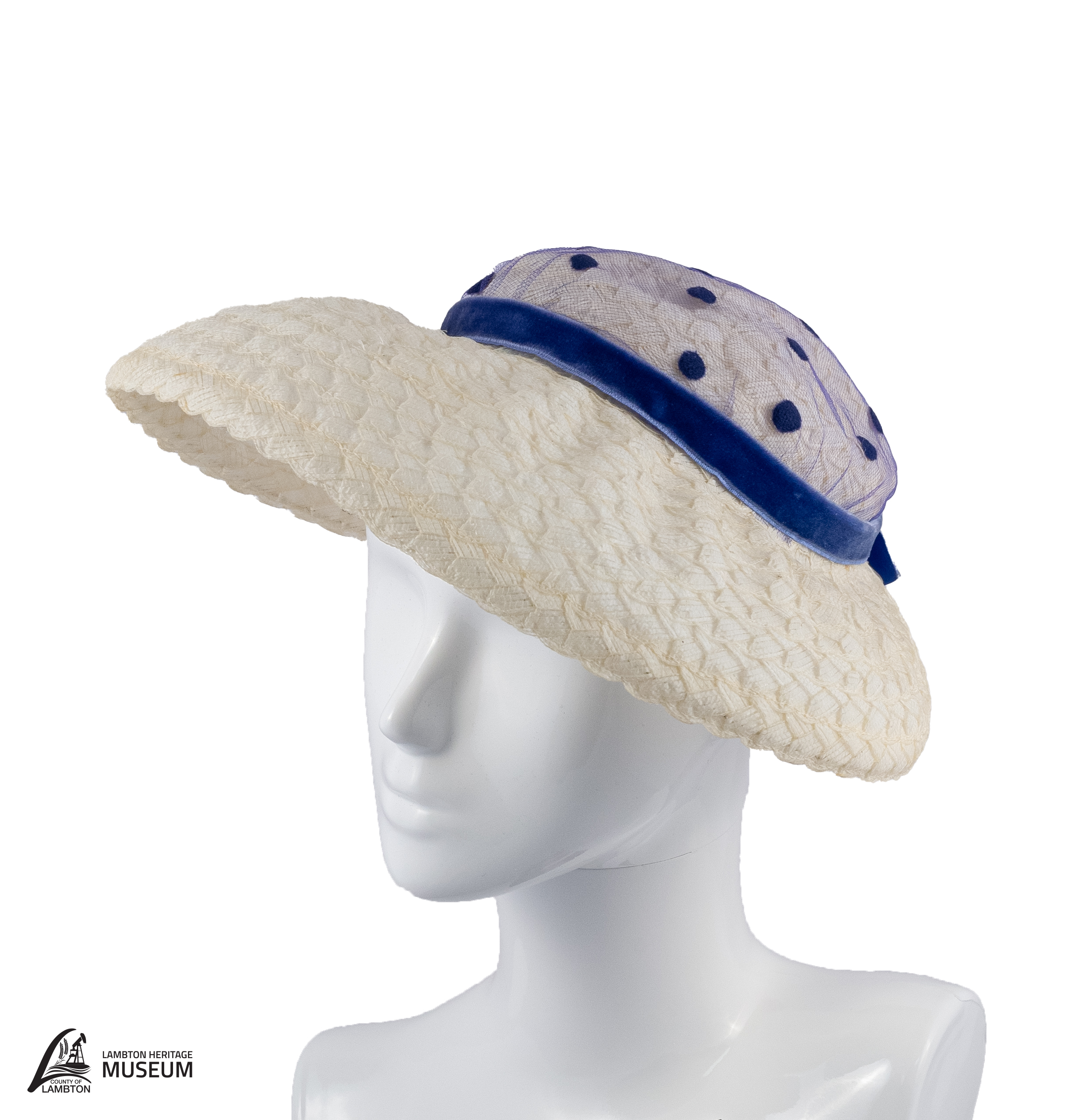
Feather In Your Cap
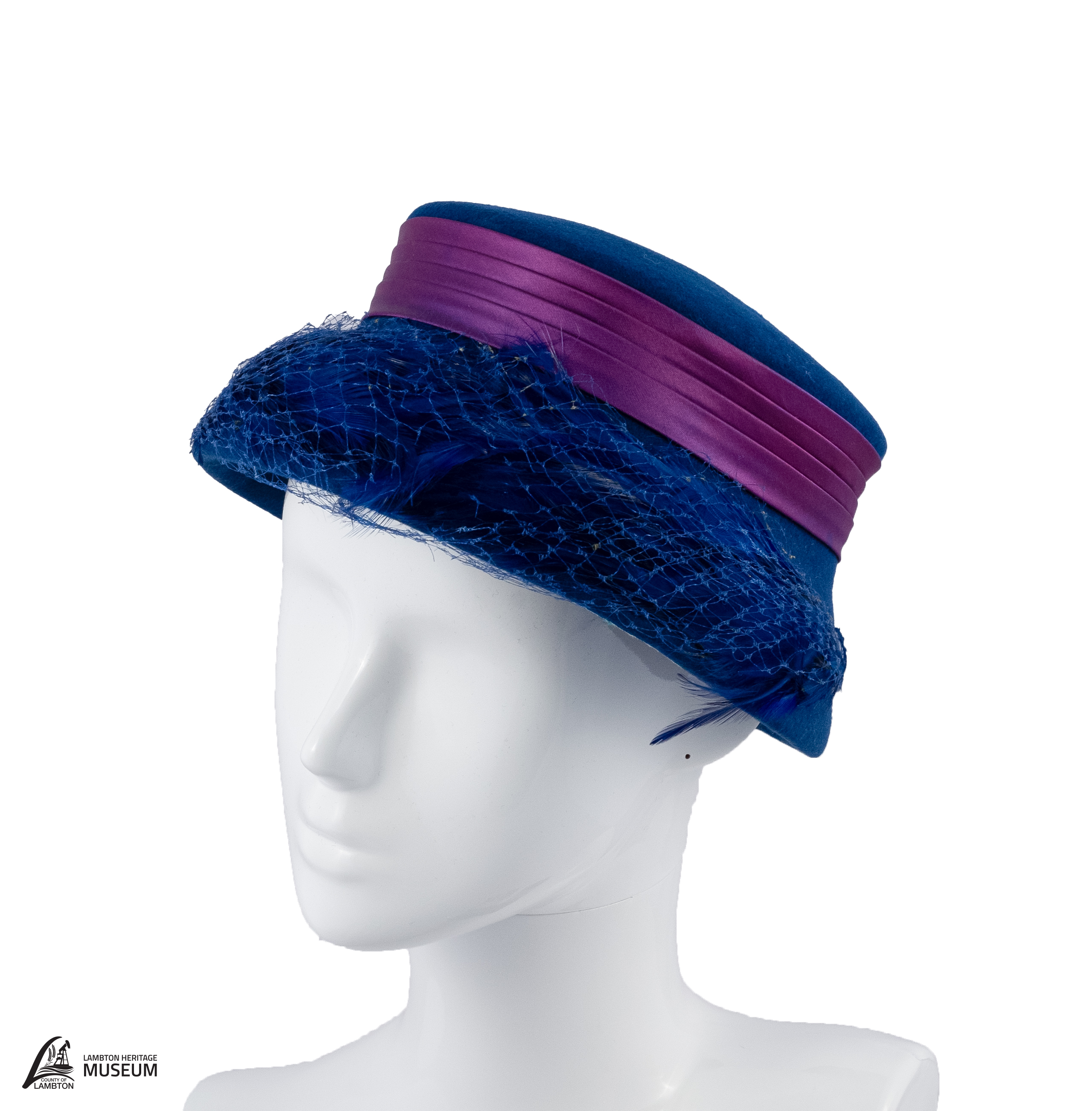
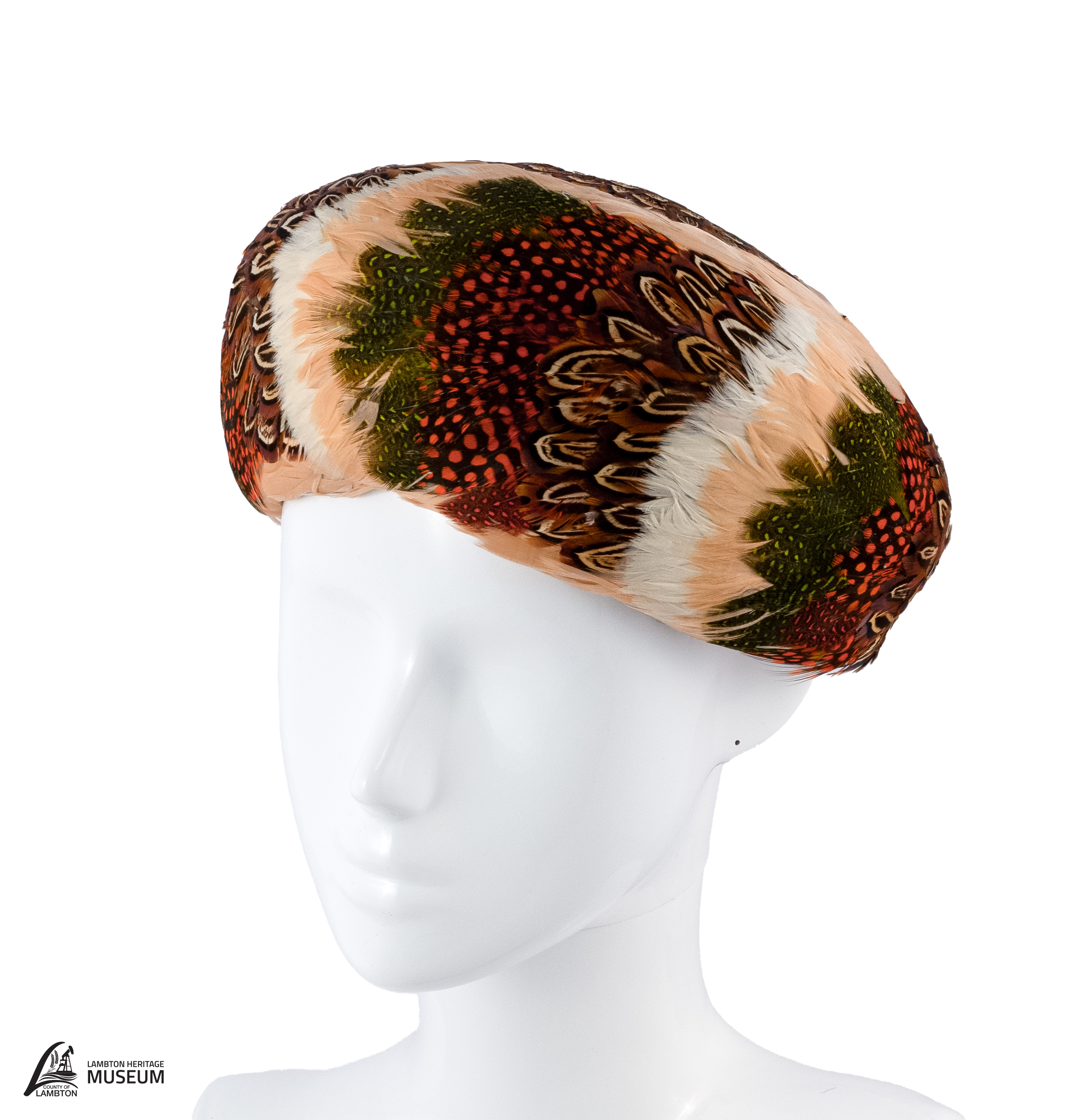
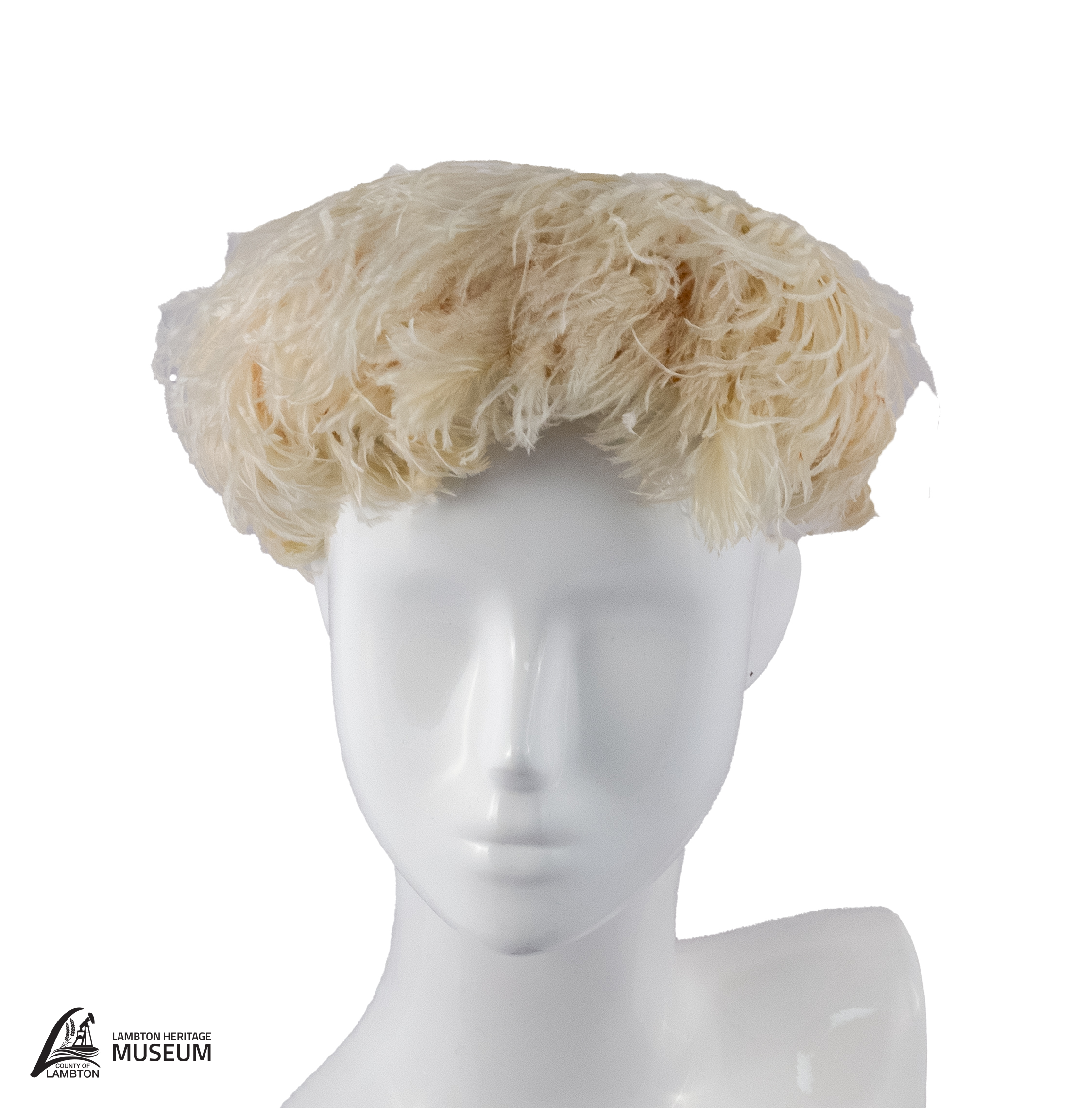
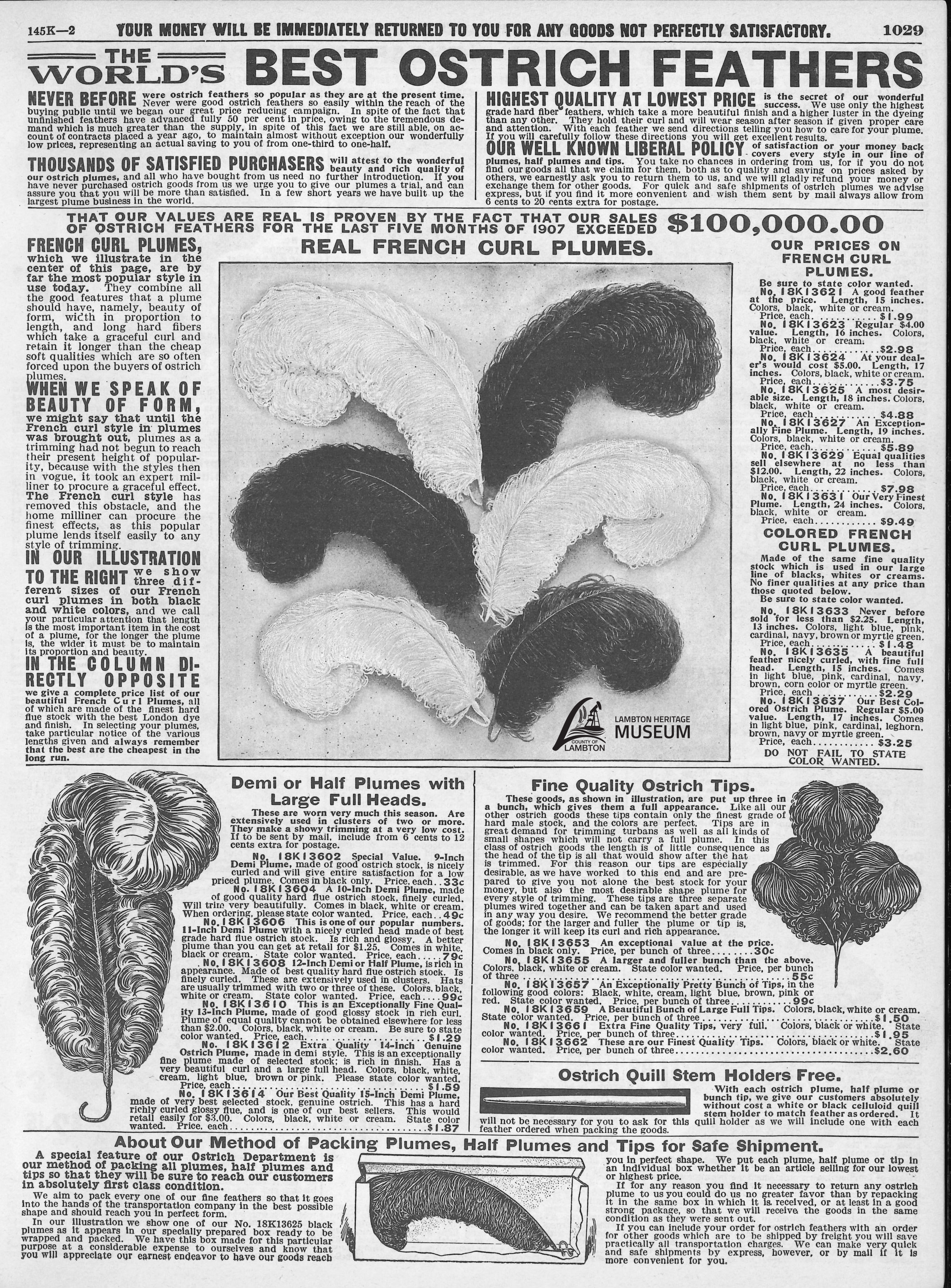
Bird feathers are a standout embellishment on many hats. They have been used by cultures around the world. Ostrich feathers became so popular the birds were rare in the wild by the late 1800s. This prompted the creation of ostrich farms. From the early 1900s, global treaties and initiatives curtailed the hunting of wild birds for millinery purposes. Today, feathers typically come from farmed birds like pheasants and geese.
For ladies not partial to feathers, there were lots of alternatives. Ribbons, lace, ricrac, embroidery, netting, brooches, beads, textured or patterned fabric, real and faux fur, and artificial flowers were all widely used. To complete an outfit, it was recommended to pair a textured hat with a plain dress, or a solid colour hat with patterned clothing.
Join Our Mailing List
Stay up to date on latest news and programs.